This invitation is for people living in New Zealand.
Kia ora,
Are you Deafblind, or do you identify as having difficulty seeing and hearing?
We invite you to take part in a research project that aims to develop a New Zealand-specific definition of Deafblindness. Your voice will help shape services, policy, and recognition of Deafblind experiences — both in Aotearoa and internationally.
Who can participate?
Adults (18+) who identify as Deafblind – no formal diagnosis needed
People willing to share their experiences in a supported, accessible interview
What’s involved?
One interview (30–60 minutes) at the Deafblind Conference or another accessible time and location
Communication support provided (e.g., NZSL, tactile signing, speech-to-text, Braille, Easy Read)
Why join?
Your insights will help create a culturally inclusive definition of Deafblindness for Aotearoa and contribute to the International Deafblind Identities Study.
Participants will receive a $50 gift voucher as a thank you.
Currently, I am in the UK for a family funeral/memorial while Guide Dog Sienna has a holiday in NZ. One thing that has stood out to me is the amount of mainstream assistance that is available for people with disabilities to participate in community life in comparison with NZ. I will describe some examples and comment on how I believe these normalise disability in society and work toward inclusiveness.
The first place I noticed this was on arrival at the airport. I arrived at Heathrow Airport and had to meet and assist booked, which gave me the usual assistance to identify and collect my luggage and move around the airside area of the airport. What set this apart was the ground travel assistance – non-airside.
I needed to travel from Heathrow by coach to Gatwick Airport. The ground service staff were available to help and because of this, I was escorted from the arrivals gate to the bus station and assisted in finding the correct bus and introduced to the driver. I was particularly impressed with the inclusion in the discussion and handover. The bus service then radioed ahead and had ground staff meet me at Gatwick to walk me from the bus to the entry I needed to be at.
I thought this may have just been an airport service. I was surprised that passenger assistance services on trains, buses and many public places are just a normal part of society, and companies are expected to provide this service. This is one way I think can go a long way toward normalising those with access needs by allowing them to act as fully as they would in the community. The significant difference between the UK seems to be the Equity Act or legislation to protect against discrimination. The equity act is explained in relation to those who live with a disability on the Disability Rights UK website and equity advisory service.
I was surprised to find how extensive passenger or customer assistance is, for example on trains, an app allows anyone with a disability to book assistance getting through the station to their train, transferring trains, finding seats and much more. Firstly there was no need to prove disability on booking. Furthermore, bus companies have a tick box if you require assistance and this is organised for you. The sense of inclusiveness that being out and about with assistance normalised in society bought is hard to describe and I believe is something that NZ could learn from to enable participation rather than being disabled or devalued by community constrations to participation.
In NZ, I have experienced those who work in the service industry avoiding interactions with me and being apprehensive about approaching me. What I notice here in the service industry is little fear about approaching, offering assistance or asking how they can help. This has also contributed to inclusion rather than the exclusion that society institutionally provides.
The other built-in things I have found to assist those who live with a disability that is not common in NZ that benefit not only those with access needs but also the general population:
Hearing Loops (albeit telecoil) on buses and trains allow me to connect my hearing aids and hear announcements.
Verbal announcements of stops on buses.
Far more braille and high-contrast signs.
Some tactile and braille signs at attractions and busy places.
Large print menus.
For payment at the table in restaurants, it is common to bring the EFTPOS machine to the table instead of going to the counter.
Far more restaurants with either large print menus or QR codes for devices to allow access.
Online ordering in restaurants negates the need to walk up to a busy and crowded bar.
Wheelchair ramps are built into London and South buses.
People give up priority seating for those who need it, e.g. elderly or those with a disability (even on the tube)
Staffed lounges at bus and train stations for those with access needs that offer ticket help, toilets, seating and people to walk you to the gate.
What could be improved is the consistency of street crossings, ramps, step size and audible or tactile traffic signals.
With this in mind, I challenge Whaikaha and the NZ Government to produce legislation with teeth to grow a more inclusive, supportive and accessible society.
While visiting a restaurant last tonight, I encountered a situation that made me uncomfortable—compounded by societal norms, values and accepted processes.
The issue that leaves me uneasy is related to paying for our dinner. Tonight a printout was provided to check before payment. This included a list of meals and their prices. My friend read this and agreed that this was correct. However, on payment, the total was higher due to a surcharge for payWave use regardless of card type.
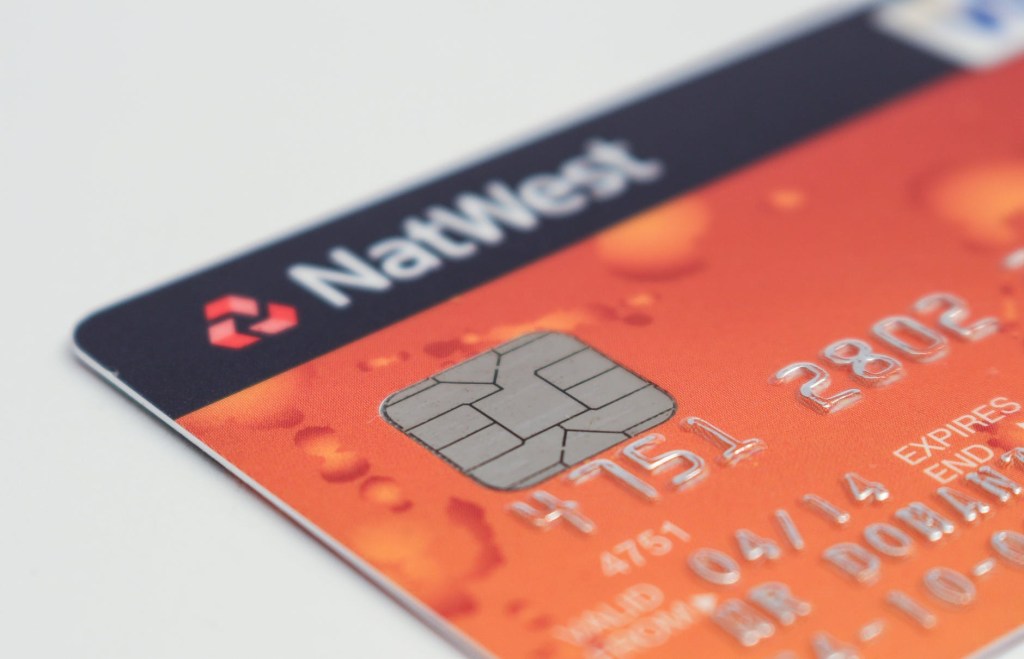
A chip or payWave card stock photo
Tonight the staff said nothing about a surcharge and my friend didn’t notice this until after we had left. My expectation would have been that the staff verbally informed us of the surcharge before adding it to the bill and taking payment.
While a surcharge is commonly expected for payment via credit card, this is not common when paying by debit card. PayWave seems to have a surcharge for both credit and debit cards and individual vendors decide whether to pass this cost on to the customer.
The inconsistency between vendors of passing on surcharges and communicating surcharges is key. I am happy to pay a surcharge when I know about it, but I do not think I should pay one when not informed.
So there appear to be two issues. The first is no surcharge notification and many vendors seem to rely on customers to notice a difference or small hand written note explaining this and opt out or question the difference between the expected bill and the charge on the card. The second issue relates to customers with disabilities who find it challenging with transactions requiring card insertion.
When I mentioned this, my friend explained some places have a small sign (often handwritten at the counter) stating x% surcharge for credit cards and very rarely, there may be one explaining the surcharge for payWave. She also confirmed that on multiple occasions, the surcharge has added automatically without informing the customer, particularly by the newer EFTPOS terminals that automatically add this.
As a blind person, I rely on staff to inform me of costs or any additions to the charges as it is difficult to read receipts and EFTPOS machines. However, there is also a new trend of adding. Surcharges without notification or appropriate signage or communication, which pushes the responsibility of noticing, questioning or opting out surcharges to the customer before payment. If a person cannot read for any reason, they seem to be significantly disadvantaged.
My thought would be that it is the responsibility of the vendor to make it clear if the addition is. I also wonder if staff taking payments are aware that their selection of payment type adds a surcharge.
A reasonable accommodations to make the shopping process equitable for those customers who are challenged by reading or card insertion is needed.
The most obvious accomodation is to let the customer know verbally before completing the electronic transaction if the total differs from the information given, e.g. on a menu or itemised receipt. Not doing this could be considered a form of invisible discrimination based on disability.
To get equity for those who are challenged inserting a card or using the machine would be to not charge a surcharge for payWave making it the same price or fee as insertion of the card.
Consistent use of an agreed process system would go a long way to making NZ more accessible.