Category: Social Justice

  • Today has been a long day that has caused me to reflect on the influence of disability on work-life balance and the societal expectations and the impact these have on our ability to achieve sustainably.

    I will give a background and a fur baby story to set the scene. I have been quite sick with atypical pneumonia, narrowly escaping a stay in the hospital with fast talking and daily check-ins as there was no care for my fur babies at home.

    Last night I finished my last meeting at 1930 and felt energised and ready to change the world, metaphorically speaking. I went to bed soon after as I knew I had to be at work by 0730 for an early international zoom meeting.

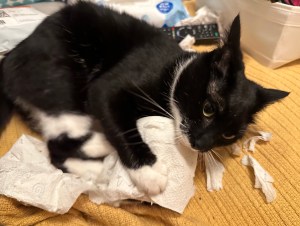
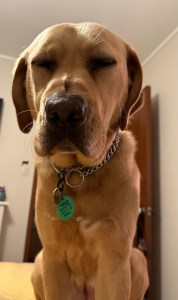
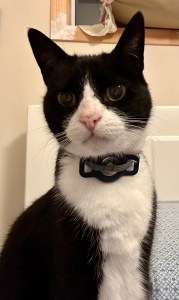
    This morning I was woken by the fur babies at 0430 because they were hungry. It started with a 15-year-old cat named Sylvester, who came and sat on my chest. When I woke, Guide Dog Sienna, who had just turned two, joined the circus, trying to get my attention. Last but not least is my younger cat Annie who found a toilet roll I had on the bed (as I still have the remnants of a cold) and decided to attack / shread this.
    As someone with rapidly progressing blindness, getting enough sleep and pacing visually fatiguing activities is an essential part of self-care. I recently came across some research explaining the effect cognitive load associated with low vision and was surprised at just how much effect this can have.

    I had experienced a similar realisation about cognitive load when moving from travelling a white cane to guide dog travel. Travelling using my vision and white cane relied on more cognitive load to process the environment as I needed to find and process objects. In contrast, a guide dog avoids objects, thus, decreasing cognitive load and visual fatigue. This can be compared with a chaotic and decision-dense paediatric resuscitation where the increased cognitive load can lead to potentially life-threatening errors. Some examples of literature around this are below.

    With this and other research in mind, cognitive load affects performance. Bringing the story back to the impact of vision loss on cognitive load.

    Today I needed to go through about 140+ assignments to make sure all instructions were followed / elements included as there were differences between markers and I needed to determine the extent of the problem before I could ask for any assistance. This a very vision-heavy process that would not be required if no disparity was found in moderation. This is probably only the second time I have needed to go through this many in 11 years.

    Adding in less common tasks like this adds visual processing and cognitive load. What I gave no thought to was the impact of this visual task on my day and week after needing to do this. I had already been told that there was no extra staff this week to help and knew that we were already behind in returning work as I had been very sick and unable to moderate. So I just got on with it; a process had served me well in the past when I had more vision. However, now with less vision, I need to be more aware of the consequences. To give context, I have a total of about 5% of the visual field of a person who has no field loss.

    The personal consequences of doing this are multifaceted and include eye pain, headache, fatigue, nausea and more which often continue for a day or two. One situation I noticed today was with two people at my office talking to me while I put on Sienna’s guide dog harness and a group of about 2-4 people approaching. I hesitated between removing Sienna’s lead and putting on the harness for enough time for her to escape and follow one of her favourite people. I can usually manage the visual processing of that many people if I am not already visually fatigued. The processing, headache and eye strain did not allow me to respond quickly at this point, causing chaos around my retrieval of said Guide Dog. It wasn’t until reflecting on this situation for future prevention that the fatigue and cognitive load components of this became apparent.

    The consequences of not looking over all the assignments are potentially increasing student distress and anxiety as well as answering many more emails asking how long until results are out of dispute announcements. One dilemma this raises is what is more important, the needs of one versus the needs of many. Do I want to prevent stress, anxiety and emails, or do I add them to my workload later?

    I easily forget that I can’t always approach things the way I traditionally have. For example, I throw more of my personal time at something or spend all day on it to make it happen when it causes a new set of problems or issues to resolve later. This raises blurred boundaries and expectations around what is acceptable when taking work home to complete it.

    Is there an expectation it will be finished despite the work time available? Who’s expectation is this, an employer or employee, workplace culture or societal view?

    With low vision in mind, one of my ways to mitigate decreasing vision has been taking work home to complete. However, the downside is increased fatigue and cognitive load, so a delicate balance is required. It would be interesting to find out how others feel about taking work home to complete as an accommodation to mitigate a disability. Why this seems acceptable in some situations and not others? Is this equitable?

    A similar concept is a trend in society to expect others to do more with less on a constant or continual basis in multiple aspects of our lives.

    A consistent message has been to do more with less on many fronts, for example, in healthcare, education and volunteering. In the past, phrases like keep calm and carry on, have been valued and, in turn, may have become an expectation rather than a mantra. One could argue that this concept could be applied to other situations as the output of an action is valued more than the vehicle to get the output. I question the sustainability and wonder if this mindset influences a culture of competition, blame and inadequacy for some.

    We need a social change in areas such as nursing or healthcare to value a person and their experience on a journey rather than measuring the outcome. Suppose we continue to be conditioned to value the outcomes above over the vehicle. By subscribing to this, are we creating an inclusive and equitable culture?

    From a personal lens, I wonder how much society has influenced me to value others over myself. Or in the case of student anxiety above my health or comfort? Similarly, with a progressive disability lens, does valuing the outcome without consideration of the journey allow an equitable situation?

    I hope sharing my thoughts has provoked some thought and conversation.

  • If I utter the words denial of service, half of those in my life will think my computer was hacked and the other half would link this with accessibility. These two varied meanings illustrate the differences in perception across our society and show the value of knowledge and education.

    This post covers multiple interrelated concepts, so first, I will give a little background information about myself for context. All my life, I’ve been an incredibly outgoing person who would give anything a go, from waterskiing to scuba-diving to rock climbing, skiing and many other non-team sports—going out with friends, travelling internationally and working on very demanding jobs. This was with around half of the vision that sighted people have.

    I also revelled in proving the career advice at high school very wrong. I was advised to find a job as a secretary and that being a nurse and attending university was not attainable, mainly as my eyesight made me read extremely slowly.

    In response, I went to live in another country, returning and entering university as an adult and later becoming a nurse and gaining a PhD in an Engineering, Computing and Mathematics School. I tell the story to give you an example of my tenacity to point out when I raise challenges, difficulty, defeat, fatigue or other associated things this isn’t said lightly.

    There have been ups and downs with my vision over the years, one of which was having my retina reattached on my 21 st birthday for the third time. Throughout, I have managed to continue in jobs that I love, progress in my career, meet interesting people and live a fantastic life. I Achieved this by working Hard not to let people notice that I had In issues with my vision, and when it became a problem, work harder to make it less visible (in hindsight, perhaps not the best approach, but it was what society accepted at the time).

    There was a point in time I had to change in 2019. I lost half of my remaining vision, leaving a quarter of the field of someone with an average field. Recently I have learned that we have about 5 degrees left (of 155-180 degrees) and we have exhausted all treatments available. In a nutshell, there is no more medicine and science can do to stop or slow deterioration.

    Guide Dog Sienna arrived when we began the first three tests to confirm progression and that treatment wasn’t working. While this was amidst our training together and the news and training were incredibly fatiguing, the companionship, joy, freedom and responsibility this bought was unbelievable.

    Guide a dog Sienna and I was having lunch in a friend’s office last week to celebrate his birthday. This photo shows the companionship we have when Sienna is out of the harness.

    To give you an idea, I had not gone out for entertainment or leisure alone (without a friend) for about five years. I hadn’t realised that my world had become so small and that I was saying no to more outings with friends because they were challenging visually. With Guide Dog Sienna since May, I have been to a play, a movie, a tour of my favourite craft shop in Mt Wellington and many other places I would have usually avoided. Last week, one of my colleagues said you are so outgoing and do so much now, although they didn’t know me 5-10 years ago as a comparison.

    On today’s adventure, I wanted to go to a different shopping centre to pick up something my local didn’t have. To achieve this, we went to a different bus stop on a different route. When we arrived, we checked to see how far away the bus we needed was only to find it cancelled and the next 45 minutes away. I had also booked an appointment, so 45 minutes plus a 30-minute bus ride for what would take 10 minutes in a car wasn’t going to get me there on time.

    I looked on the taxi app and found a 30-minute estimated weight which was also cutting it fine. So switched to Uber. The closest Uber was 4 minutes away. The cost wasn’t too bad, so I booked.

    I messaged the driver to say I was travelling with my guide dog and could they push the passenger seat in so she could sit in the footwell. I also ask them to yell out when they arrive as I can not read the number plate. This message has served me well with no issues in the past.

    I got a reply from the driver about two minutes later asking me to cancel and rebook my ride. I answered no; if I cancelled, I would be charged and he would be paid. I suggested he cancel instead.

    He didn’t cancel and I could see the car in the app getting closer as it used GPS. I got a message from Uber saying your driver is arriving. A vehicle with the right colour and shape pulled up about 5m away with no movement or opening of the window or verbal communication. The car then sped off. At the same time, I got a message saying the driver had cancelled the ride.

    This made me wonder if the driver came in o the site to press cancel while he was at the start of the trip, as I understand there is an option to say they couldn’t find the person. I would completely understand if the driver cancelled with a message that he had a phobia of dogs or severe allergy, but no communication, just cancellation, is poor.

    The app automatically assigned another driver six minutes away. I sent the same message about the guide dog and heard nothing back, but the app had told me that the driver had read the message, so I assumed all was good. I got another text saying that the driver was approaching and I could see it on the app. A car the right colour and shape pulled into a nearby driveway (carpark entrance), paused and drove away. At the same time, I got a message saying the driver had cancelled the ride. I wondered if they had seen Guide Dog Sienna and I waiting and cancelled.

    The app automatically assigned a third driver 8 minutes away. I sent my message and got a reply saying “got it” and saw it was read. This driver did arrive, called out and moved the seat forward so Sienna could sit in the footwell. He provided fantastic service. Unfortunately I missed my appointment due to drivers cancelling and the appointment had both late and cancellation fees which is super frustrating.

    I am left wondering why the first two drivers cancelled and drove away and suspect it was the Guide Dog. Guide Dog Sienna is highly trained before she became my guide and behaves beautifully in public transport, taxi and ride-share. Legally we can not be denied service based on the basis of her being a dog in these circumstances.

    I want to raise awareness of these rules and regulations in New Zealand for those who are not aware.

    I did send Uber a message hoping they could provide drivers with education around service animals and communication. I was impressed that my message to Uber help was answered with a phone call in less than an hour. The support person reassured me that their staff do have online training about service dogs and that the two drivers would be asked to complete this again and have their app restricted until this was achieved. They also gave me the 0800 phone number of the accessibility support team should this occur again.

    The crux is that even though I missed out on an appointment and paid cancellation fees, the positive experiences and changes having a Guide Dog brings far outweigh the experiences like this.

    This experience has strengthened my goal of educating this around me about access needs.

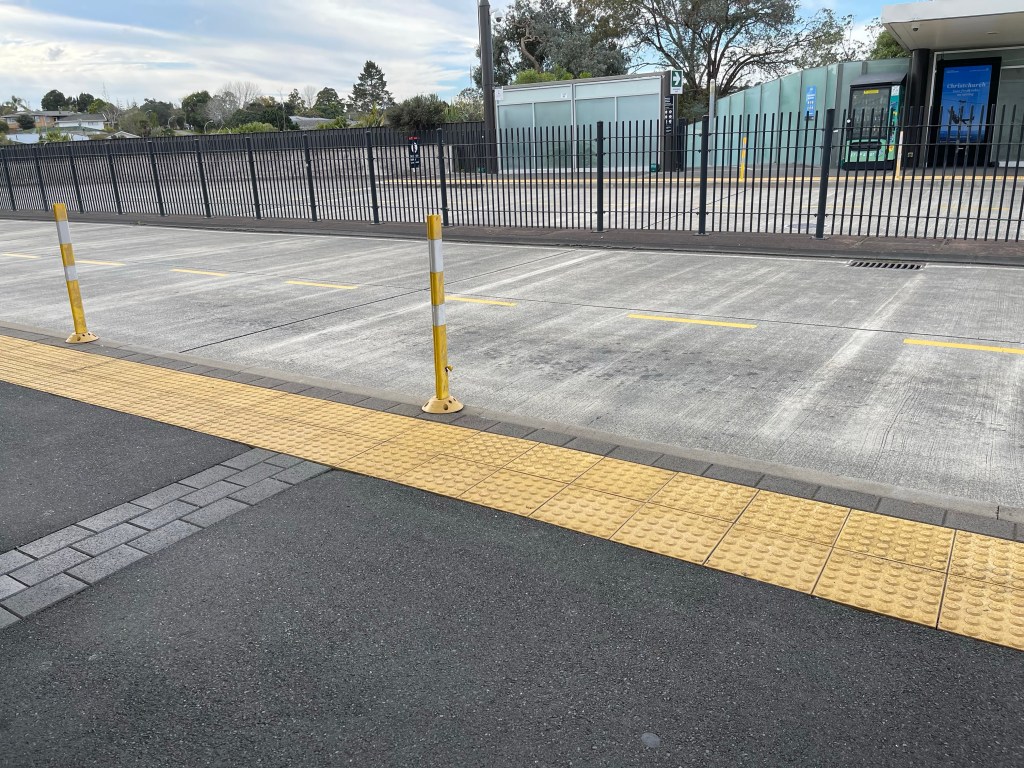
    A mission for a separate day is related to educating bus drivers about needs – not just access requirements but considering everyone getting off a bus. The photo below shows the bus platform at a station near my house. I got off a bus here and the bus driver stopped so that one of the poles on the side of the platform was directly in the middle of the door.

    As people were getting in as I was getting off, Sienna was watching the people and went around the pole and as it was so thin, I walked straight into it. Had the bus driver pulled forward 1 to 2 metres, this would not have been an issue. As it was, the pole is an issue for anyone, not just Guide Dog Teams.

    Local bus station with poles on the edge of the platform. Interestingly none of the other stations I have these blocking the way.
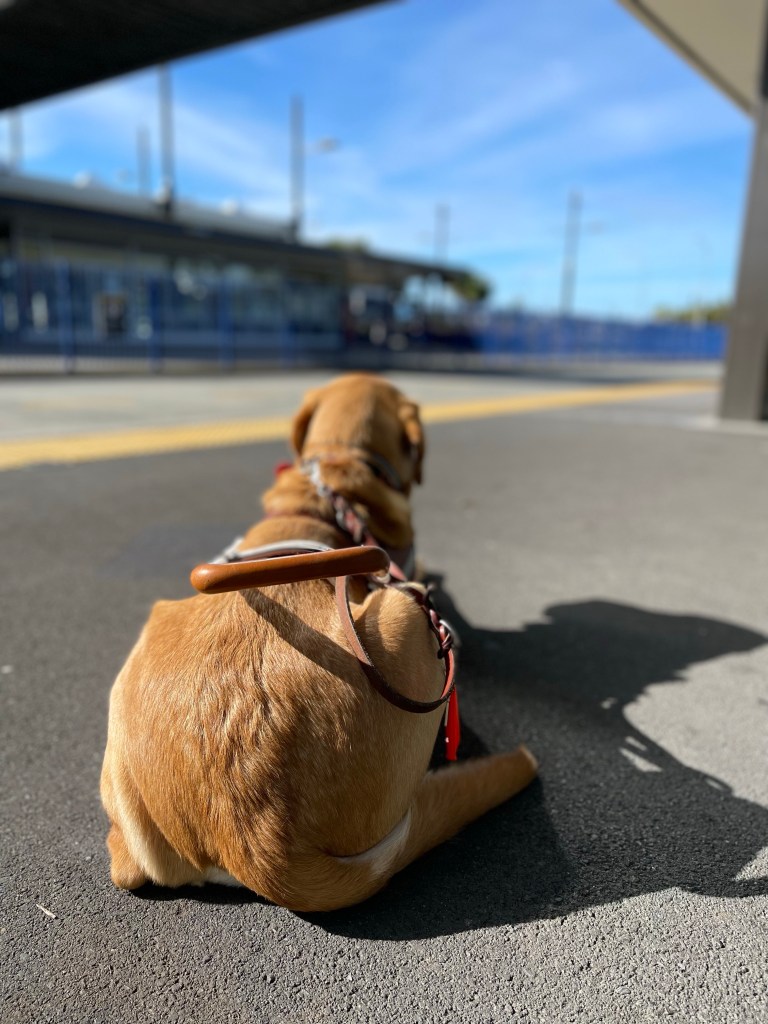
    This photo shows Sienna sitting at a different bus station waiting for a friend. Note no poles are blocking the platform!
  • Last week I was writing an abstract for a conference presentation that looked at the perceptions of accessibility in digital health from a consumer, clinician and developer perspective and it led me to reflect on assumptions and perspectives each sector brings.

    This reflection led me to think about the impact of how much we share or don’t share about the experience of disability. How much or what do others understand in designing of access needs.

    I have spent much of my recent years trying to look sighted, hide the fact that I had low vision and get on with things because I wanted to fit in. This raises a question, in choosing not to share this information, have I made it more difficult for myself later after losing more vision and becoming medically or legally blind?

    In society, we are conditioned to keep things to ourselves that may be difficult for others, are different or considered personal or might be a burden to others. In doing so, have I made it more difficult for others to understand why I may need some assistance or rest? Similarly, has my silence contributed to the societal perception of disability by omission or stopped others from learning about the lived experience of disability?

    With this in mind, I thought I would describe what I see (or don’t) and describe some of the impacts this has in everyday life, in particular the things that society and even the blind community often do not discuss.

    I will start with the clinical information. I have one sighted eye. In that eye, I have about 5 degrees of 150 to 180 degrees of vision remaining. While in optimal conditions, I see pretty well in that five degrees. It is considered low vision and my vision varies from day to day and is very dependent on the environment.

    When people often think of blind, they immediately imagine this as seeing nothing. In my experience, what I see is often more problematic and fatiguing than what I do not see. For example, in my 5 degrees of vision, what I see is very patchy. Some parts are clearer than others. I often see flashing lights, blind spots and blurred areas, which can move considerably with the pressure of my eye (usually, it is now low five mmHg or under – 12 – 20 mmHg is optimal).

    Food for thought.

    This means continual visual fatigue; what this is like for me is often experiencing visual overload, and my brain doesn’t keep up with filling in the gaps—holding my head at different angles to get the best vantage point and squinting to be able to see an object. The result is constant neck and back pain, headaches, fatigue and eye strain/pain. I have noticed more recently that if I do any visual activity on the weekend, it takes me time to recover and to work optimally during the week. This means reducing my usual fun activities on the weekends and resting. Picking and choosing what to do or attend to and listening to my body.

    For example, I booked a matinee play I wanted to see yesterday several months ago, but the amount of visual fatigue and workload at my job meant I slept through the time I was meant to be there. I was fortunate to get a ticket for the last showing but had to pay twice and use taxis instead of the bus, which quadrupled the original cost.

    Back to what I do see. In the upper left, there is swirling light, and if I look above the midline, a band of glare obstructs what I can usually see, causing discomfort. For this reason, I look at things from a different angle and wear sunglasses a lot more than many people do and have an office at work away from the windows with dimmed lights.

    My brain sifting through all of the abnormal visual activity is very distracting and fatiguing. I have had colleagues say how you are. I often reply fine or good because explaining visual fatigue is complex and challenging for people to imagine. I have said tired; the responses I have had are things like “you are always tired” or “yes, we are all tired”, so most of the time I don’t say the extent of fatigue or anything about it.

    Another quite disconcerting symptom is nausea. When around multiple moving objects, such as a crowd, I become nauseous from the visual distortion and movement. Having Guide Dog Sienna has helped enormously with this, as I can walk with my eyes shut in crowded areas to decrease nausea and increase my confidence when out and about. However, along with a guide dog comes barriers. For example, I was denied entry to places because I have a dog, such as certain Spotlight stores and my local Dairy. Uber drivers were cancelling the job because I have a dog, even though I put in the comments I have a guide dog that sits in the car footwell.

    Guide dogs are allowed into these places, shops, public transport, and rideshare; however, some people do not understand or know of this. They assume a dog is just a pet dog. I spend a lot of my free time educating others about access needs, equity and many other related concepts in a kind and compassionate way so that people may have a little insight into why I do things differently.

    This blog post and Guide Dog Sienna’s blog and Facebook page are freely available examples of this, alongside giving presentations, discussions, answering questions and encouraging others to ask.

    I guess what I would like to get across is that we are all learning to interact in an environment and have different values, beliefs and contexts, which all add to the narrative of any situation. It is these things that add richness to our human nature and lives.

    With this in mind, I am privileged to have worked in several different sectors, including clinician, educator, researcher, computer admin, software development and I am a consumer of these with access needs that offers a unique perspective.

    Back to how this blog post started submitting an abstract for a conference that covers digital, clinical, developer and consumer or lived experience perspectives combining technical, clinical and social constructs is unique and I am hoping that this will be accepted and am looking forward to presenting on a topic that will inform on many levels.