Category: Vision

  • On the 1st of October, it will be six months since Guide Dog Sienna entered my life! To mark the occasion, I will write a series of posts over the next few weeks explaining the difference working with a guide dog has made for me.

    It seems like a lifetime ago that Guide Dog Sienna arrived at my house. In reality, it was 1 April 2022 and we promptly began our training the next day. At the end of the training, we were released into the world and that is where much of the learning began!
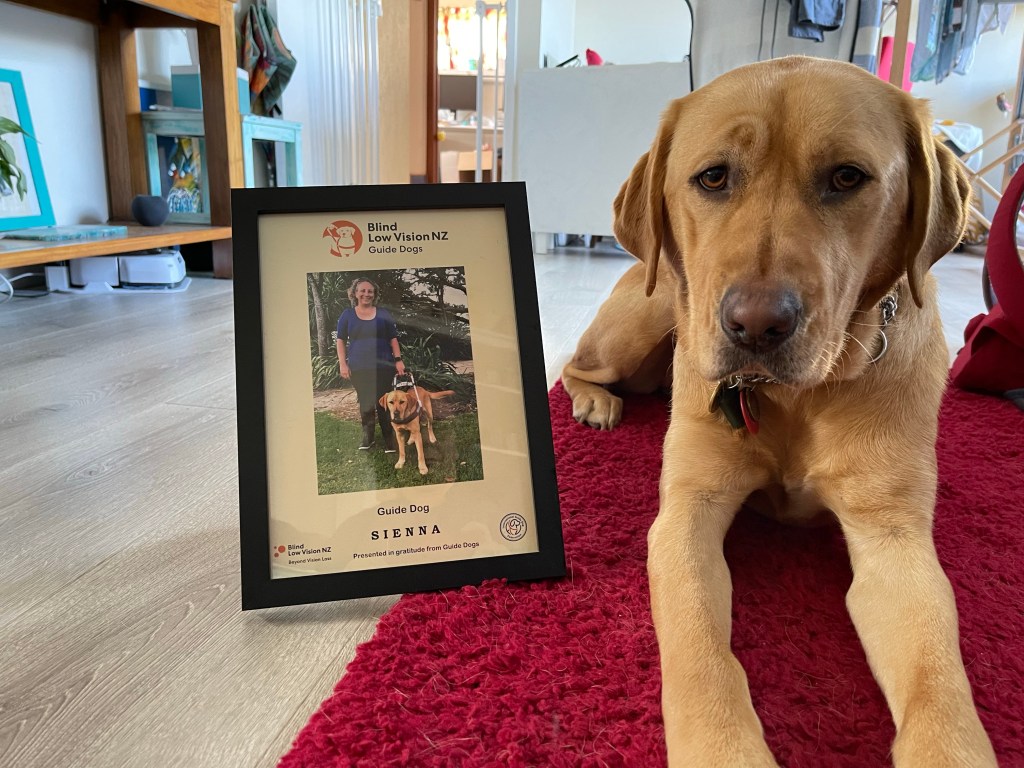
    Sienna a Golden Labrador cross sitting next to our geaduation photo.
    Sienna sitting next to our graduation photo – a gift when we graduated as a guide dog team.

    The most significant change I have noticed is that I am more confident when out and about in unfamiliar environments. Working with Sienna has considerably decreased the fatigue associated with navigating the environment with deteriorating vision.

    I will describe an example. I had not noticed that I had unconsciously stopped going out as much and was experiencing extreme fatigue due to vision changes and associated cognitive load with getting around my environment.

    One particular instance where this was particularly challenging was after I got a new hearing aid and had a professional event after work with a health informatics organisation I support (about a year ago) in a part of town I was unfamiliar with.

    I did my usual preparation with bus routes and arranged to call a friend to get me when I arrived at a local Pub as I was worried I would not be able to see her in a crowd so we could walk the rest of the way together. This journey meant walking through the city at dusk during rush hour. I had lost about 30 degrees of my central vision over the preceding six months and was pushing myself to keep engaging in my professional responsibilities.

    I was walking up Victoria St in Auckland, there was rush hour traffic, many people bustling and dreaded road works that made the route different to what I expected. The sun was going down and reflecting of a building making it very difficult to see anything. I was using my cane but because of the new hearing aid and vision loss the visual and audible stimulation this situation became overwhelming. So much so that I needed to stop, sit on a nearby bollard and close my eyes to recover a little.

    To give more context, I had about 20 degrees of vision on my left lateral side (now I have about 5-10 degrees). In this area, my vision is patchy and my brain fills in the gaps in vision that the blind spots obscure. When I am tired or in fast-moving crowds, my brain stops being able to fill in the gaps. This causes distortion, nausea and dizziness.

    After five or so minutes, I continued up the road to the Pub, texted my friend and I waited for around 10 minutes. I followed this up with a phone call which went to answer phone. By this time, the street was even more crowded, so I went into the pub to look for them. There were four large areas. I scouted around all of these, hoping that one of the groups would recognise me or I would recognise one of their voices.

    Unfortunately, I didn’t recognise anyone and no one called out. I went back outside where I had arranged to meet my friend and called again, getting her answer phone. By this time, the visual distortion from the crowd and traffic made me nauseous, dizzy. and emotionally drained. I was already tired from a typical work day, so I decided it would be best to go home and skip the awards dispute wanting to go. I left my friend a message saying I would get something to eat and head home because I couldn’t find the group.

    I retraced my steps, realising I would need to walk some distance to get the bus home, so I stopped at a small cafe to get a cup of tea. My friend called me as I finished my tea, saying her phone was in her bag and she got my message. We agreed she would wait outside the pub. I decided to join the group and returned to the Pub.

    With the fatigue associated with getting there, I found interacting with the group in a noisy social environment almost impossible and had run out of energy. In hindsight, this may have been an excellent opportunity to listen to my body and go home to rest.

    However, I chose to push on my goal had been to reengage with professional obligations, colleagues and industry. We walked as a group down to the company hosting the event.

    Awards were given, and food and drink were shared, but I was so exhausted I couldn’t engage at the level I usually would have. I was lucky my friend noticed and arranged a lift home for me with a colleague, as the travel to the event had left me physically and emotionally exhausted.

    I had applied for a guide dog about eight months before this occurred, thinking that it would be something that would be useful later in my life. I had heard that the wait time was 2-6 years and that getting a guide dog was something of the future. It was after this that I realised that perhaps working with a guide dog was something I needed at that time rather than in the future.

    If I contrast this with similar events now with Guide Dog Sienna, the difference is immense. Last week we went to Wellington to a Digital Health Leadership Summit, which was all city centre, unfamiliar routes and many people and moving objects. However, having Sienna there decreased my visual fatigue and cognitive load as she helped me avoid people and objects as opposed to locating and navigating them with a white cane and vision. This means I don’t need to use my remaining vision or interpret tactile feedback and is the difference between participating fully or in a limited fashion.
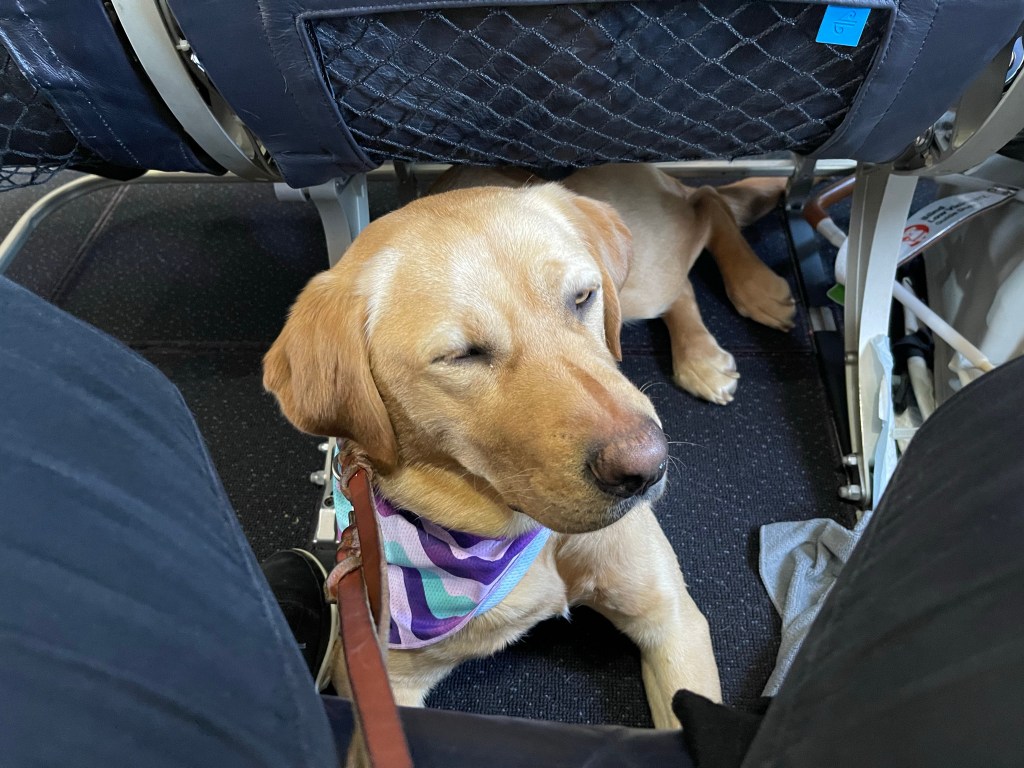
    Sienna curled up under the seat in front of me on the Plane on our way home from Wellington last week.

    While I didn’t attend one function, this wasn’t related to my vision or fatigue but redundancy notices at my work that I wanted some downtime to process that announcement.

    So the conclusion of my first post about the difference that Sienna has made is that she has allowed me to function with less cognitive load and visual fatigue in my job.

    I can’t end a blog post without some Sienna cuteness.
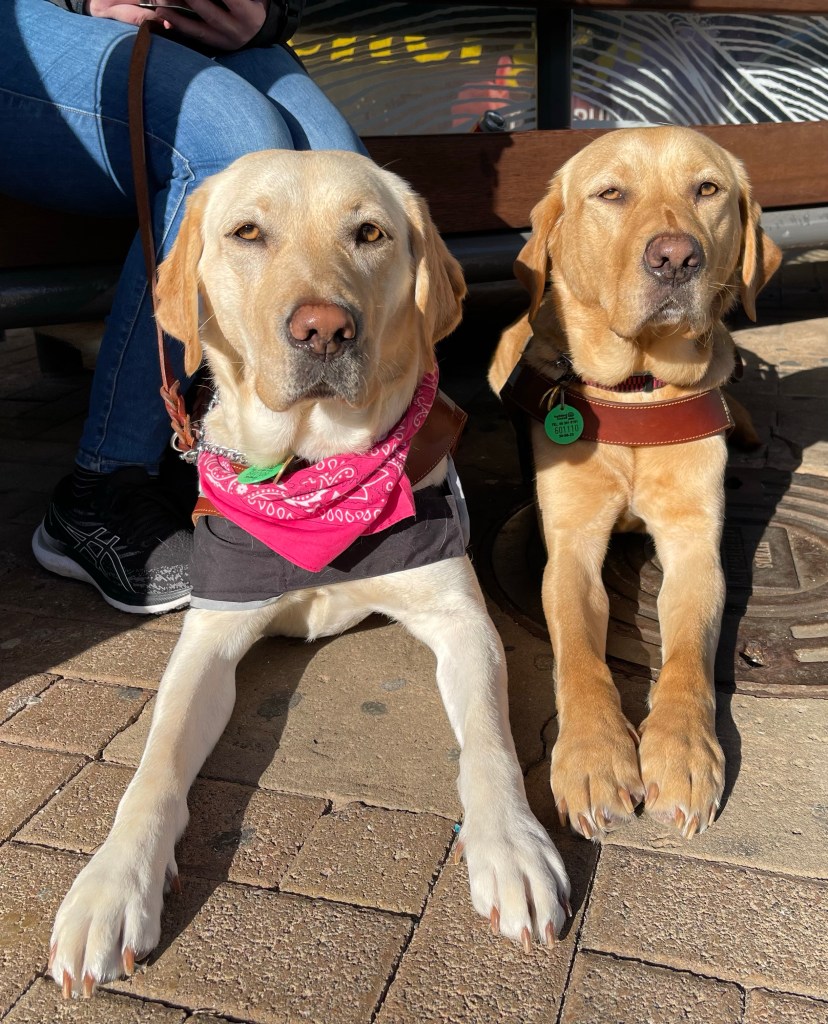
    Sasha left a golden labrador guide dog with Sienna right a dark golden labrador waiting at the bus stop together.  Both in harness in down position.
    Guide Dog Sienna with her Sister Guide Dog Sasha last weekend when we went out for dinner and a show.

  • When some of my acquaintances lose a pair of sunglasses, I hear the phrase, “I will just buy another cheap pair…”. I wish it was that easy and didn’t involve navigating a stereotype.

    Over a week ago, I misplaced (likely on the bus) my sunglasses. I did the usual things like phone the bus company and searched my home and office but came up empty-handed each time.

    Many reading this probably assume I could buy another pair of the same. I wish that was the case and will go on to explain.

    As my vision has decreased, using what I have remaining is extremely important from a safety and quality of life perspective. I have multiple eye conditions, each causing sensitivity to light and glare. Interestingly each condition requires a slightly different tint to provide optimal viewing and finding that perfect fitting and tinted pair of sunglasses is challenging.

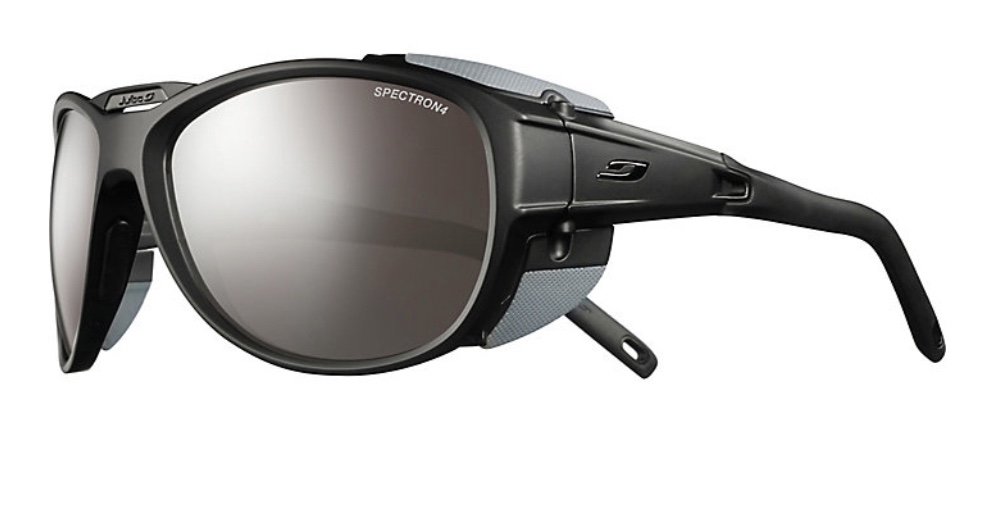
    My last pair were, in fact, the best I had found. These were the Julbo Explorer 2 High Mountain with dark brown (category 4) spectrum tint. A person recommended this particular model who has low vision and lives in the US. She explained this model decreased glare and the side shields blocked light from getting around the sunglasses.

    Although not the most becoming feature, the side shields worked very well. I have had multiple surgeries on my eye, which have altered the shape. I had an emergency iridotomy around 2009 that lets light into my eye through iridotomy, distorting what I see and putting q band of glare into my field of view. While this can not be repaired and occlusive contact lenses to stop this, our unsuccessful sunglasses with side shields made the difference between being able to function outdoors and not being able to.

    Julbo Explorer 2.0 with spectron high mountain lens
    Photo of the Julbo Explorer 2 with spectrum high mountain category 4 dark brown lens. Photo – https://www.moosejaw.com/product/julbo-explorer-2-0-sunglasses_10352650

    These sunglasses are designed for mountaineering and another particularly useful feature was the built-in venting to stop them streaming up.

    There are few places that stock this particular model of sunglasses in New Zealand and those that are out of stock at the time of writing this post.

    Did I mention the price – between $270 and $349 and sunglasses of a similar calibre and quality (but so not meet my needs) are around the same price or more.

    The part that bothers me about this stereotype is the helplessness people often associate with it, which feeds the negative or deficit construct of disability. I am an independent, strong and articulate person who would ask for help if required. However, for the most part, I adapt and problem solve to function without assistance (other than Guide Dog Sienna, that is) to navigate everyday life.

    In society, there is a stereotype of a blind person as needing assistance (helpless, potentially a burden on society etc.), totally blind, and wearing dark sunglasses with either a cane or a guide dog. I spend much of my life educating people to help them realise that most of the blind community does not match this. In that, blindness is a spectrum and is highly individual. Not everyone needs a cane, guide dog or sunglasses. As an example, I can function without these things. However, wearing sunglasses reduces pain and glare while using a cane or guide dog, keeps me safe and all reduces the visual fatigue from navigating and adapting to an environment that is designed for those with sight.

    I was surprised that the thought processes associated with a stereotype of a blind person held by some of our society have crept into my journey to buy new sunglasses. With this in mind, I would like to share my perception of my disability as a contrast.

    My disabilities do not define me; they are something I navigate to contribute successfully to society. Yes, navigating an environment built for those with good vision is difficult, fatiguing and frustrating at times, and often tasks that rely on vision take me longer to complete, but it doesn’t stop me from participating or contributing.

    However, living with a disability has also given me opportunities, such as an understanding and lived experience. Coupled with skills such as being a health care professional, educator, researcher and computer scientist allows me to provide multiple contexts while advocating for myself and others to improve our environment and societal perceptions of disability.

    Back to the sunglasses, if I could afford and somehow import the same model I had, I would. However, my investigations found this to be challenging in an adequate timeframe. As I am finding glare challenging without my sunglasses, I have spent most of the day in many suburbs across Auckland trying on different makes and models of sunglasses to find a pair that meets my needs.

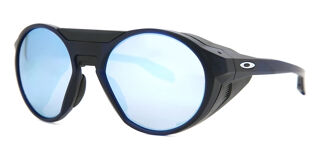
    Form and function are hard to match. The best lenses I could find were in a sport/cycling pair of sunglasses by Oakley, the Jawbreaker model, which would not have been suitable to wear to the office or formal functions. The more formal or traditional sunglasses did not provide the coverage required. The best model so far is the Oakley Clifton Deep Water sailing as they have removable side shields and excellent lenses – the downside is the cost of $379.

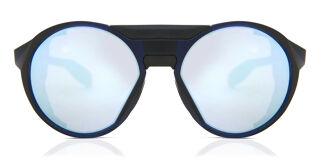
    Oakley Cliften Sunglasses picture from website listed in caption.
    Oakley Clifden Translucent Blue (Deep Water lens) – Photo – https://image4.cdnsbg.com/1/441/479693_1599508998135.jpg?width=320&height=160

    So the search for sunglasses continues and I am looking forward to finding the perfect pair.

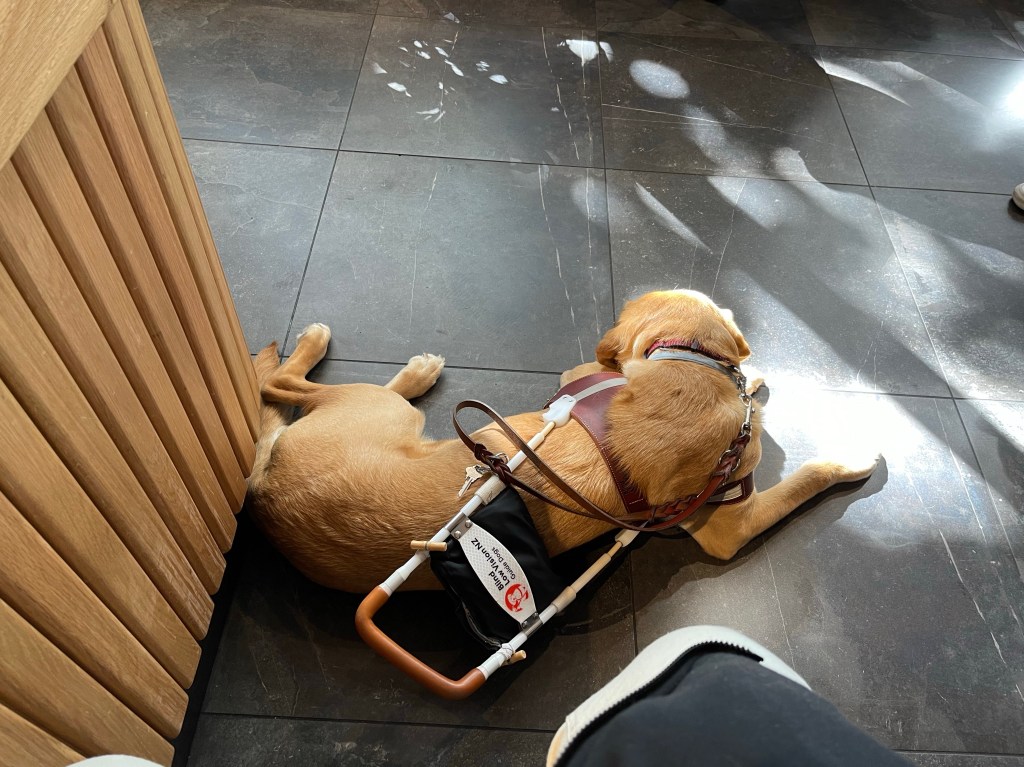
    A blog post would not be complete without a photo of Guide Dog Sienna, so below is a picture of her trying to lay in a tiny piece of the sun coming through a coffee shop window while we took a break from sunglasses shopping.

    Guide Dog Sienna in her harness laying in the sun.
    Sienna is enjoying the sun in a cafe today.
    , , , ,
  • I hope others learn from the stories and reflections I share on this page. With this in mind, I would like to share a story from last week to illustrate how societal assumptions affect individuals and influence others.

    This started with a bus journey. On the way home from work, Guide Dog Sienna and I were going to get a bus as we needed to get home quickly.

    We waited at the shelter. At this stop, three routes are scheduled close together at certain times of the day (2 minutes apart). The sun was shining, so I shaded my eyes to give me the best chance to see the bus approach. Because of the traffic, it was hard to hear the difference between vehicles. As a bus came, I signalled to the driver to stop.

    The bus pulled past the bus stop; Sienna and I walked to the door and stepped in and asked the driver, “is this bus the XXX bus?”. I waited for an answer and he sat, not acknowledging me, staring forward. He didn’t answer or even acknowledge me. I took a step closer and said, “excuse me, is this the XXX bus?” He gestured upward and said, “You saw it”, to which I answered, “actually, I didn’t; I can see the bus shape but couldn’t see the number”.

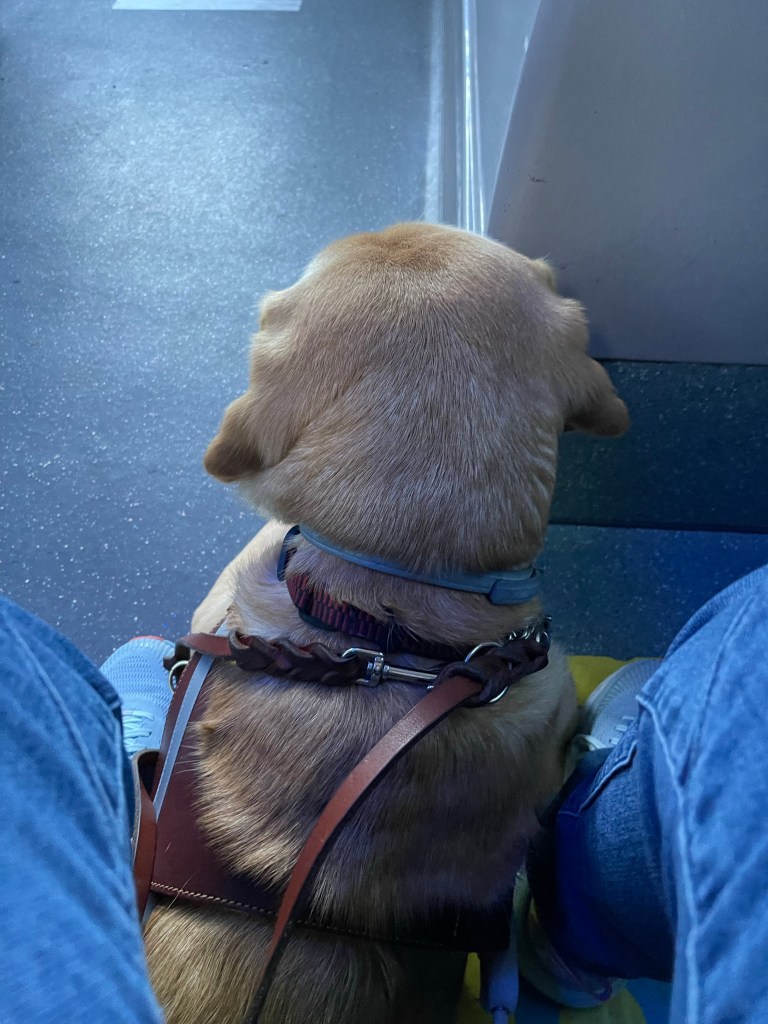
    Sienna sitting in under my seat in the bus.

    His response was to look at my guide dog, raise his hands and shrug, repeating, “you saw it”. I didn’t know how to respond on a bus with other passengers on it, so I swiped my bus pass and asked Sienna to find a seat.

    This interaction has made me reflect on public expectations of those with low or no vision. The reactions I mostly encounter are the expectation I can either see nothing or everything (and I am training the Guide Dog I work with). If appropriate, I will try and explain. Still, the part that seems complicated for others to fathom is the spectrum and variability of what I can and can not see, depending on many other factors.

    This is the first time a person has thought I had been faking vision loss. In hindsight, I would have loved to ask the driver why he thought I could read the sign yet still asked him. I suspect the answer will be because I knew when to flag down a bus, which was a rather large blob compared to all the cars. I believe this type of assumption reinforces some of society’s deficit view of disability.

    On reflection, I may have contributed to this earlier in my life, hiding my vision loss, for example, by not using a white cane when I probably should not have been viewed as different. I started to use my cane full time when I injured myself tripping over things, yet in hindsight, not having the stigma attached to it and starting use earlier would have been much safer. I was going out of my way to look sighted to fit into society as society expected.

    Now, as someone reasonably well established and sure of my place and disability, I look back to early in my vision loss journey, when I felt like a fraud in both the blind and sighted community. I was pretending to be more sighted than I was to fit in but didn’t feel I was “blind enough” to be considered part of that community either.

    This illustrates not only society’s common perception of Blindness (often a have or have not sense) but also the views of the blind community where there is a delimitation between low vision and total blindness and multiple definitions around the world.

    Here is an example. I searched for the World Health Organisation definition ( https://www.who.int/news-room/fact-sheets/detail/blindness-and-visual-impairment) of the blind when writing this post. The definition that they had on their website only referred to visual acuity and not the field of view, thus only acknowledging a subset of those who are considered blind in many countries. The below excerpts (photos) show Australasian definitions.

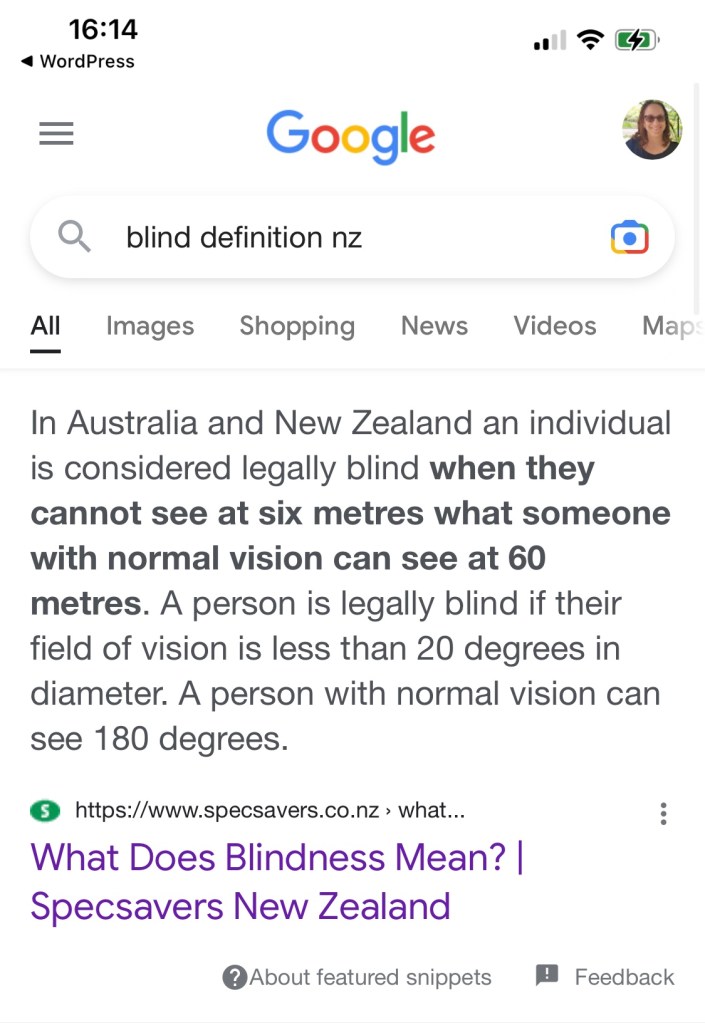
    Legal Blindness (Google Search):

    First definition in Google with Blindness and NZ

    Blindness (NZ Government Departments):

    From the Cost of Vision Loss in NZ Report in 2009.

    Back to our assumptions. It is common to have assumptions or notice similarities or differences and we learn from these. However, as the above example and definitions show, there are varying perceptions of blindness from legislation to individuals. As a result, I question, Is it realistic to expect an individual who has not been in a situation before to know and understand without using assumptions?

    I would argue having assumptions is normal. One of the key messages I give my students regularly is that we learn from assumptions it is our recognition of these as assumptions and what we do with these that is the important part.