Category: Uncategorized

  • As a deafblind woman who is articulate and has worked in the healthcare sector, interaction with government agencies is still necessary and can be extremely challenging.

    In my experience, our system is flawed. One of the fundamental issues lies in the negative and deficit perception of disability often fostered within our society and institutionally in health and disability services.

    In the past, disability has often been viewed through a lens of deficit or as something negative. In today’s society, this perception appears to have transformed into the belief that disability is a problem that needs to be fixed to align with societal norms. This perspective can have significant consequences and impact the trust individuals have in the health and disability system.

    In the following blog post, I will describe a personal situation where a service agency has considerably affected my ability to trust our health and disability system. By sharing this experience, I hope to shed light on the challenges faced by individuals with disabilities and the importance of fostering trust, empathy, and understanding within our healthcare system. Together, we can work towards a more inclusive and supportive environment where everyone feels valued and their needs are met with dignity and respect.

    In the past, I have received repeated assurances from the organisation involved that my disability is permanent and meets their criteria for blindness. There will be no future need to re-establish this fact as this decision has been to their health team and principal advisor in the past. Even with these reassurances, I still have recurring demands to prove the extent of my disability and threats or actual services stopped at each interaction.

    The situation above undermines not only my lived experience of disability but also erodes my trust in the support services designed to assist individuals in similar circumstances. The emphasis on proving the extent of one’s permanent disability can be profoundly demoralising, distressing, and prolonged, further exacerbating the challenges already inherent in navigating life living with access needs.

    Drawing a thought-provoking comparison between the justice system and how people with access needs are treated in society can highlight important disparities. In the justice system, the principle of “innocent until proven guilty” ensures fairness and protects individual rights. Once a decision is reached in a trial, it generally remains unless challenged through an appeal process.

    However, for individuals with access needs, particularly those with proven permanent disabilities, it can be disheartening that their disability status is continually questioned or subjected to reassessment. This contrasts the justice system’s approach, where the burden of proof lies with the prosecution. In the case of disability, it seems more equitable to adopt a “disabled until proven otherwise” mindset. Requiring individuals to repeatedly prove their disability can foster an environment of distrust, casting doubt on the credibility of the individuals and the healthcare professionals involved in determining their level of impairment.

    By recognising the parallel between the justice system’s presumption of innocence and adopting a similar approach for disability, we can promote a more inclusive and empathetic society. Such an approach would prioritise trust, understanding, and respect for individuals with access needs, alleviating the burden of constantly reaffirming their disability status.

    The below interaction is one I have around every six months with a particular agency providing support services to those with access needs. This occurred again yesterday (the third time in under two years) and as a result, I am left feeling devalued by agencies that interact on behalf of the society I live in.

    After providing my identifying details and engaging in a conversation, I initially believed that everything was in order and no further interaction was required. However, I later received a phone call stating that I no longer meet the agency’s criteria to be classified as blind and they are withdrawing their support services.

    This immediately made me believe that for some reason I wasn’t worthy of their support. On further questioning, this was without any new information being requested, presented or obtained beyond what had already been examined and approved as being used to determine I am blind on two separate occasions. This illustrates the power that one person or organisation can have in determining anothers life path or future.

    Ever the advocate, I checked their website and publically available manuals, as well as legislation around blindness and none, had changed since last time. Thefore, I asked for specific details on where I no longer met their criteria. Still, instead of receiving a direct response, I encountered avoidance and the need to consult with their manager.

    When the manager did reach out, they stated that their health team believed I no longer met their criteria. In response, I provided copies of all of the documentation, which had been examined and deemed sufficient to meet their criteria for permanent blindness previously.

    I explained that this contradicted your ophthalmologist’s assessment and the supporting documentation and referred the manager back to the letter containing my assessment that used the same language and criteria published by the agency to prove my blindness once again; I was told that they would need to go back to the health team to clarify.

    Later, the manager informed me that the health team would seek advice from a Principal Health Advisor and get back to her … and now I wait … to find out if I am deemed disabled enough to recieve services that I have been assessed as requiring permanently and been recieving for several years now.

    This sequence of events highlights the inconsistencies, lack of communication, and delays within the agency’s decision-making process. The fact that multiple layers of consultation and review are required after assurance on several occasions, I am eligible, meet their criteria as blind having gone through managers and health advisors in the past and would not be asked again is not only confusing but distressing.

    The threats of service cessation have been conveyed predominantly over the phone, without a written record of the challenge to disability status; therefore the interactions and related power imbalance involved remains invisible. Open communication that is visible is required, along with active engagement between individuals with disabilities, healthcare providers, and service agencies, is crucial in fostering trust, enhancing understanding, and promoting inclusivity.

    By involving all relevant parties in the decision-making process and maintaining transparent lines of communication, we can ensure that eligibility decisions are made fairly, with empathy and transparency. This approach helps mitigate the distress caused by sudden and unexplained changes in service provision. Having a documented record of discussions and decisions provides clarity, accountability, and an opportunity for individuals to voice their concerns, thereby fostering a more inclusive and supportive environment for individuals with disabilities.

    It is important that service agencies recognize the significance of open communication, actively engage with individuals with disabilities, and collaborate with healthcare providers to ensure that decisions regarding eligibility and service provision are made in a fair and transparent manner.

    New Zealand has taken significant strides in tackling these issues through the implementation of the enabling good lives principles. This approach holds great promise in transforming the perception of living with a disability and empowering individuals with access needs. While commendable, it is important to acknowledge that the services aligned with these principles encounter hurdles rooted in their current systems and processes. By addressing these challenges head-on, we can bridge the gap between theory and implementation, thereby ensuring that the true essence of Enabling Good Lives is fully realized. This will allow individuals with disabilities to access the support and assistance they deserve, free from unwarranted scrutiny and uncertainty. With a collective effort, we can foster a society that embraces inclusivity, optimism, and empathy for all its members.
  • For those of you who are new to my blog, I am a nurse and academic who happens to have a vision impairment. In the last year or so my night vision has decreased and susceptibility to glare has increased. To learn more about my vision, please see my previous blog entries. I have recently started using a white cane to get around mainly when it is dark, or the glare is excessive.

    This blog post primarily focuses on moving around London using public transport to get to the conferences that I have been attending along with visiting friends and family. There is a lot to cover, so I have concentrated on spatial awareness, travelling on the London tube, the pedestrian environment and crossing signals.

    So far I have participated in an education conference in Bloomsbury, London for three days, visited friends in Hamburg and Oldenburg in Germany and am currently staying with family in the south of England until returning to London for a Digital Health conference next week.

    Spatial awareness …

    One thing that has stood out while moving around in the UK and Germany is that people appear to be more spatially aware than those in Auckland. What I mean by this statement is that so far fewer people seen to walk around staring at their cellphone or feet and more people seem to notice what is happening around them. While this is a generalisation, and there are always exceptions to the rule, I feel safer moving around in crowded areas because more people notice what is around them.

    One of the challenges I have is in crowded areas where people moving around me affect my ability to judge distance, and any movement distorts my vision; this means that I tend to limit moving around and feel nauseous when others move.

    The other surprise was the number of push bikes in Oldenburg; however, these travel on the road or bike lane on the footpath and both pedestrians and riders show far more respect for others sharing the space than I have encountered in Auckland. The part of navigating around Germany that was the most challenging was re-learning traffic patterns and remembering traffic approaches from the opposite side of the road. A tip for vision impaired travellers is that there are no buttons on to press at the crossing, but you need to cover the whole front of the box with your hand, and it detects this. Hidden on the bottom is a plastic indentation which moves when the light is green.

    On reflection moving around as a pedestrian in both London and Germany has been less stressful than I expected. I suspect this was directly related to the spatial awareness displayed by others and the distinct lack of electric scooters on footpaths. While I have been known to ride an electric, I did not realise how much stress sharing a path with unpredictable and fast electric scooter riders in Auckland had caused me until I was in a place where they did not exist.

    Travelling on the London Tube …

    Navigating the tube has been an “interesting experience” the most significant difference from Auckland is the sheer volume of people who try to fit onto the one train is somewhat overwhelming. Often I have found that I am standing holding on to a rail with people crushed against me on all sides. As someone from a country where there is less crowding on public transport, I found this quite confronting. In comparison, the trains in Hamburg were very well scheduled and timed, and this meant that I always got out of one train carriage, walked about ten paces across the platform and got straight on to the other train which meant that both platforms and trains seemed less crowded.

    However, in saying this, in the UK, even though the transport system is crowded, many staff members are there to assist in navigating the system and are very quick to offer assistance. For example, at Victoria station, I stood for around 30 seconds looking at a sign before I was approached by station staff asking if they could assist, he then offered to walk me to the platform I needed.

    Similarly, each time that I have entered a tube station with my white cane, a staff member has approached and asked if they can help – which is fantastic. So far the assistance I have accepted has been in the form of asking the way to a particular platform and I have been given very clear directions and if I have declined further assistance staff have accepted this without question. What has stood out is that the workers in London and on the Southern UK train network never seem to make assumptions about the assistance that I need but asked if and how that they can help.

    In contrast, interacting with members of the public travelling has been variable. I have had some very positive interactions and some very poor interactions. For example, in a packed tube train where I was standing surrounded by people and unable to move in any direction, the tube stopped at a station, and several people got off of the train. A woman grabbed both of my arms and pushed me into a seat saying “sit down”. A seat is excellent, but, I was somewhat overwhelmed by someone deciding that they could by physically moving me without asking is not pleasant and is also making assumptions about my needs. This treatment put me in a vulnerable position, where I felt very uncomfortable.

    The Pedestrian Environment …

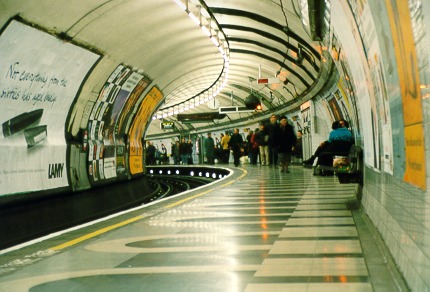
    After travelling in New Zealand, Sydney, Brisbane and Melbourne, I was surprised that the distance between the platform and train was so variable in both height and length. Similarly, the curbs and stairs are also variable. While many people could argue that this is a part of history and charm of London, this has meant is that I have had to rely on my white cane to determine distance far more than I would at home. An advantage of this is ensuring safe travel, but as a part-time cane user, it has been an emotional step for me to increase the cane use.

    wlo-bl-nbplat

    Photo from: https://www.squarewheels.org.uk/rly/LUgenPhots/WLO-BL-NBplat.jpg

    Some tips that may assist vision impaired travellers:

    UK General:

    • Accessibility is well legislated, conferences etc. offer large print and accessible materials as a standard.
    • Audio described performances at the theatre are common and often no extra charge.
    • Attractions will often offer different and more extensive tours to those with a disability.

    UK Transport and Travel:

    • Obvious one traffic drives on the left.
    • Expect more crowds.
    • Traffic signals have tactical markers under the box in the form of a cone that spins when it is safe to cross.
    • Train platforms aver variable in distance and height to and from the train.
    • Stairs in the underground are variable in markings (can be absent), shape, size and surface.  They can also be odd shaped such as curved with unexpected pedestrian tunnels crossing in older parts of the network.  London Transport offer guidance on how to avoid stairs they also offer accessible journey planning advice including planning trips without stairs.
    • Some platforms are curved and not straight.
    • Cobblestones are problematic, consider a rollerball tip for your long cane.  If you did not bring one you can order one online or buy one onsite at the RNIB in London.
    • Tube Maps are tiny to read.  You can download a PDF or order Large Print and other formats.  An audio guide to the london underground is also available.
    • You can order a badge saying “please offer me a seat” although I did not do this and can not comment on the usefulness.
    • Concessions may be available.

    Germany (Hamburg and Oldenburg):

    • Obvious one is that traffic drives is on the right.
    • No buttons on the crossing boxes, apparently you cover your the front of the box with your hand to activate the crossing if this is required (some crossings are automatic) and tactile feedback is an indentation on the underside of the box.  
    • Cobblestones are problematic, consider a rollerball tip for your long cane.  If you did not bring one you can order one online or buy one onsite at the RNIB in London.
    • People seem less likely to offer assistance with less staff at stations in Hamburg.

  • Two things are on my mind today, the first relates to immersion in my PhD topic and the second relates to getting around in the dark.

    I have been so focused recently on completing my PhD that I hadn’t stopped to think about the broader context. When I first started my PhD journey in 2016 I believed that my ideas and research would change the world – well resuscitation practices in New Zealand to be more precise.

    The expectation of changing practice has motivated me to continue working on my research over the last four years. What I mean is I felt that this was the end goal and was achievable.

    With around 2000 words left to write (one more topic in the discussion, the limitations, future research and conclusion) my motivation has begun to wane and to change the world doesn’t seem as realistic as it did previously. I am left wondering how to translate the results of my PhD into action when publication alone is not enough.

    In 2015 I published work that proved that current practice was not accurate and in 2016 provided a solution. Despite being published in a Journal that reaches the specific population of clinicians required the previous research and proposed changes have not been further validated or found their way into practice. While testing and statistics show that my PhD work improves accuracy and reliability is society ready for change?

    I now doubt whether my PhD research is worthy of continuation because my previous research does not seem to have made a difference other than to inform and provide a starting point for my PhD.

    On reflection, this makes me question the power of published evidence to instigate change in practice. The previous change in method that I suggested was motivated by statistics, which showed a 35% increase in accuracy with a small change in the process. Surely this is evidence?

    As a clinician, I am conditioned to use evidence-based practice, and my registering body calls for us to utilise research to inform practice. In this case, even though the evidence is out there the uptake is poor and change is slow. This causes a dilemma in such a protocol based profession, follow the rules or follow the evidence. I do not believe either of these should be mutually exclusive yet this is what I see in practice and is evident in the user testing portion in my PhD.

    When I tried to discuss this with one colleague, they suggested that I am on this journey to gain a PhD and don’t need to change practice. However, I feel that without changing practice what is the point of doing a PhD?

    Another wise colleague suggested that all students come to a point in their PhD journey where they doubt the work they have done as they only see the limitations and not the positive outcome. This is a good point, but, as a researcher, I am feeling a little demoralised with the inability of my prior research to change clinical practice it seems logical that the research extending in my PhD will also not instigate a change.

    I will save the post about getting around in the dark for my next blog entry as this one has become rather long.