Category: Vision

  • As a deafblind woman who is articulate and has worked in the healthcare sector, interaction with government agencies is still necessary and can be extremely challenging.

    In my experience, our system is flawed. One of the fundamental issues lies in the negative and deficit perception of disability often fostered within our society and institutionally in health and disability services.

    In the past, disability has often been viewed through a lens of deficit or as something negative. In today’s society, this perception appears to have transformed into the belief that disability is a problem that needs to be fixed to align with societal norms. This perspective can have significant consequences and impact the trust individuals have in the health and disability system.

    In the following blog post, I will describe a personal situation where a service agency has considerably affected my ability to trust our health and disability system. By sharing this experience, I hope to shed light on the challenges faced by individuals with disabilities and the importance of fostering trust, empathy, and understanding within our healthcare system. Together, we can work towards a more inclusive and supportive environment where everyone feels valued and their needs are met with dignity and respect.

    In the past, I have received repeated assurances from the organisation involved that my disability is permanent and meets their criteria for blindness. There will be no future need to re-establish this fact as this decision has been to their health team and principal advisor in the past. Even with these reassurances, I still have recurring demands to prove the extent of my disability and threats or actual services stopped at each interaction.

    The situation above undermines not only my lived experience of disability but also erodes my trust in the support services designed to assist individuals in similar circumstances. The emphasis on proving the extent of one’s permanent disability can be profoundly demoralising, distressing, and prolonged, further exacerbating the challenges already inherent in navigating life living with access needs.

    Drawing a thought-provoking comparison between the justice system and how people with access needs are treated in society can highlight important disparities. In the justice system, the principle of “innocent until proven guilty” ensures fairness and protects individual rights. Once a decision is reached in a trial, it generally remains unless challenged through an appeal process.

    However, for individuals with access needs, particularly those with proven permanent disabilities, it can be disheartening that their disability status is continually questioned or subjected to reassessment. This contrasts the justice system’s approach, where the burden of proof lies with the prosecution. In the case of disability, it seems more equitable to adopt a “disabled until proven otherwise” mindset. Requiring individuals to repeatedly prove their disability can foster an environment of distrust, casting doubt on the credibility of the individuals and the healthcare professionals involved in determining their level of impairment.

    By recognising the parallel between the justice system’s presumption of innocence and adopting a similar approach for disability, we can promote a more inclusive and empathetic society. Such an approach would prioritise trust, understanding, and respect for individuals with access needs, alleviating the burden of constantly reaffirming their disability status.

    The below interaction is one I have around every six months with a particular agency providing support services to those with access needs. This occurred again yesterday (the third time in under two years) and as a result, I am left feeling devalued by agencies that interact on behalf of the society I live in.

    After providing my identifying details and engaging in a conversation, I initially believed that everything was in order and no further interaction was required. However, I later received a phone call stating that I no longer meet the agency’s criteria to be classified as blind and they are withdrawing their support services.

    This immediately made me believe that for some reason I wasn’t worthy of their support. On further questioning, this was without any new information being requested, presented or obtained beyond what had already been examined and approved as being used to determine I am blind on two separate occasions. This illustrates the power that one person or organisation can have in determining anothers life path or future.

    Ever the advocate, I checked their website and publically available manuals, as well as legislation around blindness and none, had changed since last time. Thefore, I asked for specific details on where I no longer met their criteria. Still, instead of receiving a direct response, I encountered avoidance and the need to consult with their manager.

    When the manager did reach out, they stated that their health team believed I no longer met their criteria. In response, I provided copies of all of the documentation, which had been examined and deemed sufficient to meet their criteria for permanent blindness previously.

    I explained that this contradicted your ophthalmologist’s assessment and the supporting documentation and referred the manager back to the letter containing my assessment that used the same language and criteria published by the agency to prove my blindness once again; I was told that they would need to go back to the health team to clarify.

    Later, the manager informed me that the health team would seek advice from a Principal Health Advisor and get back to her … and now I wait … to find out if I am deemed disabled enough to recieve services that I have been assessed as requiring permanently and been recieving for several years now.

    This sequence of events highlights the inconsistencies, lack of communication, and delays within the agency’s decision-making process. The fact that multiple layers of consultation and review are required after assurance on several occasions, I am eligible, meet their criteria as blind having gone through managers and health advisors in the past and would not be asked again is not only confusing but distressing.

    The threats of service cessation have been conveyed predominantly over the phone, without a written record of the challenge to disability status; therefore the interactions and related power imbalance involved remains invisible. Open communication that is visible is required, along with active engagement between individuals with disabilities, healthcare providers, and service agencies, is crucial in fostering trust, enhancing understanding, and promoting inclusivity.

    By involving all relevant parties in the decision-making process and maintaining transparent lines of communication, we can ensure that eligibility decisions are made fairly, with empathy and transparency. This approach helps mitigate the distress caused by sudden and unexplained changes in service provision. Having a documented record of discussions and decisions provides clarity, accountability, and an opportunity for individuals to voice their concerns, thereby fostering a more inclusive and supportive environment for individuals with disabilities.

    It is important that service agencies recognize the significance of open communication, actively engage with individuals with disabilities, and collaborate with healthcare providers to ensure that decisions regarding eligibility and service provision are made in a fair and transparent manner.

    New Zealand has taken significant strides in tackling these issues through the implementation of the enabling good lives principles. This approach holds great promise in transforming the perception of living with a disability and empowering individuals with access needs. While commendable, it is important to acknowledge that the services aligned with these principles encounter hurdles rooted in their current systems and processes. By addressing these challenges head-on, we can bridge the gap between theory and implementation, thereby ensuring that the true essence of Enabling Good Lives is fully realized. This will allow individuals with disabilities to access the support and assistance they deserve, free from unwarranted scrutiny and uncertainty. With a collective effort, we can foster a society that embraces inclusivity, optimism, and empathy for all its members.
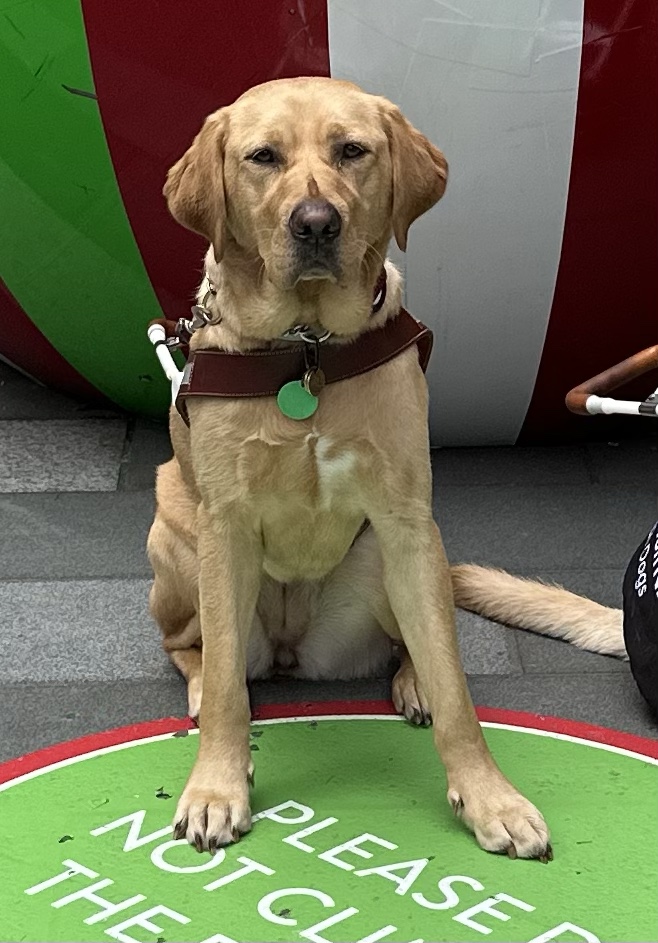
  • Since becoming a guide dog handler, one of the things that comes with it is more public wanting to interact. However, not with me with my Guide Dog Sienna.

    This post will give examples of recent interactions we have had with the public while Guide Dog Sienna was working in a 45-minute timeframe at a shopping mall.

    The environment and previous or planned activities need to be considered while we are working as a team. However, any unexpected distractions can cause knock-on effects that may compromise our safety.

    I have found that people are inherently curious about Guide Dog Sienna and often want to interact with her. What I find interesting is that often they do not interact with me or are disinterested in subjects that do not relate to Sienna. Most of the time, I encourage curiosity and take every opportunity possible to educate those around me about access needs.

    For example, when I asked someone to stop patting Sienna while she was actively guiding me and needed to concentrate. The person replied, “but she is just too cute and I wanted to pat her”. What this person and some others don’t seem to understand fully is that the dog is there for their handler, not for them. Their purpose and job are to detect dangerous situations or obstacles and ensure their handler is safe.

    Earlier this week, Guide Dog Siena and I were at Sylvia Park Mall with a friend. We had had a long day already and stopped in very briefly for one thing and were actively limiting the time we spent there to around 45 minutes maximum.

    As context, we were both woken to the earthquake and Te Aroha at 0330 and with the poor weather (rain and high wind), Sienna was not concentrating as well as she usually does. She was very excitable, wanted to play more than usual at home and when we were out, was very distracted and needed extra time and encouragement. For me this means that I need to concentrate more, it also means that she is more likely to interact with the environment around us which could ultimately be unsafe.

    Photo of a golden Labrador in harness in the sit position.
    I am working – my harness is on.

    Our first interaction was with a shop assistant, who got visibly excited to see a dog, kept circling us, not interacting with my friend or me and reached out to pat Sienna. Sienna responded by wagging her tail and watching the shop assistant. I was lucky she was doing this in the small section of vision I have and I could therefore intervene. I asked her not to interact as Siena was working and needed to concentrate. She went completely silent and backed away and left before I could talk with her more and another shop assistant came and asked me if she could help.

    The interaction in the shop caused Sienna to be even more distracted by her environment and she kept turning to face the door. As a result, I needed to concentrate on her rather than the task I was there to do. This was made more difficult by large cardboard boxes being unpacked on the shop floor, my need to move around these and Guide Dig Sienna trying to lead me to the door to leave (her reaction when she has had enough shopping). The extra cognitive load and responses to the environment for both of us prolonged our time there.

    The second interaction was at the cafe. My friend went to the bathroom and I ordered. I asked the server about the menu and she kept pointing at the overhead sign and asked if I could just read it over there even after I had explained the reason I was asking was that I could not read it. I had Sienna sitting between me and the counter while I ordered. I then asked about cold drinks and she pointed to a small printed sign saying just read this. I explained again I could not read it and asked if she had flavoured tea. The queue behind us was growing and the assistant looked stressed, so I asked for a soft drink that I knew would be available (but didn’t want) and turned to find a table to wait for my friend.

    I asked Sienna to turn around and find a seat. She was about to start doing this when a woman caught my arm, which distracted her from this task and meant she was left without me following through on an instruction to her and had to stop and talk with this person.

    The person who caught my arm said if you need some help, I can help. I know exactly what it is like. I have had keratoconus. I thanked her and explained I was okay and had ordered. She then repeated what she had said, expanding on her story about her keratoconus experience. While her words were genuine, I understood she wanted to talk about her experience. I acknowledged how hard that must have been for her and explained I needed to go.

    At the next table, there was a large family, two adults and four or five children. The two youngest children kept leaving their table and trying to get to Sienna. Their parents managed the other children and actively worked to keep the younger two away. Although this was distracting for Sienna, I appreciated that they understood Sienna was working and explained this to their children.

    On our way back to the car, we were stopped by a woman while we were walking (quite fast). She didn’t interact with Sienna but talked with me (a nice change). She explained that she volunteered at the Guide Dog Kennels and wanted to know Sienna’s name as many dogs she cared for do not go on to work.

    In my experience, most people know not to interact with their Guide Dog while working. However, what seems unclear to many is what working means. Is it only while they are walking? The short answer I use is when she’s wearing her harness. If a child pets Sienna without asking or makes a fuss to their parent about wanting to pat the dog, I use this as education and I often show them how the harness comes off and that they can pat her when it is off but not on.

    This was not the most convenient mid-stride, but a breath of fresh air as most people assumed I was training Sienna and when I explained she is my guide dog and fully trained, they either seemed to be less interested or said, “but you don’t look blind”. I will leave unpacking this for another time.

    The subsequent encounter was the real issue. While I was having a conversation with the volunteer from the kennels, another stranger walked up briskly and started patting and fussing over Sienna, who was sitting, waiting perfectly for us to finish talking. I said to the woman, “excuse me, please don’t pat her. She is working”, and she seemed taken aback by this request and said something like “but, I like dogs”, and left us to finish our conversation. Sienna was getting increasingly distracted each time a person stopped me or interacted with her and I could tell she just wanted to leave the mall.

    I finished the conversation with the volunteer and directed Sienna toward my friend’s car. Sienna was extraordinarily distracted and as a result, walked herself and me straight into a big metal 1.5 meter sign (video signage). We were both unhurt but if this had happened about 10 metres away we would have been in the busy carpark which is even more dangerous.

    What I have learned is that many people do not actually understand what working means for a guide dog. Some believe it is when they are walking along or actively guiding but it is more than that it is when they are wearing their harness. For this reason, I do not allow others to pat her while in harness. I know some handlers do let people interact while in harness but the majority do not to make this delineation clear to both the dog and public.

    As a result I plan to change my language and be more descriptive instead of just saying she is “working”.

    The key message here is consider the consequences of your actions. Even though guide dogs are cute and well behaved and are in public places they have tasks to perform and any interaction or distraction of a guide dog could in turn cause harm.

    , , , ,
  • Today the theme of cognitive load associated with low vision when interacting with the world continues. However, the focus has shifted from describing and questioning the problem to giving two simple real-world examples where a slight change from motorists could make a big difference to someone with low vision.

    Last week I posted a story to Facebook, which I will repeat here to set the scene.

    I took Sienna to the park as I had recently been too unwell to walk her all the way to work as usual (and still am) and she was becoming a little naughty as a result. On the way back from the park, we encountered an obstacle. I did use the Snap. Solve. and Send. App (https://services.snapsendsolve.com/accounts/referral?code=5EU1-1-0) to report this.

    A car completely blocking the foot path, long grass blocking the verge.  The only way around is onto a busy road.
    An obstacle we encountered on the way home from the park.

    Guide Dogs are trained to avoid obstacles and thus decrease the cognitive load and visual fatigue associated with navigation of the environment.

    Guide Dog Sienna stopped to show me there was an obstacle. This one was challenging as not only was there long grass, a pole and uneven ground, but also a vehicle completely blocking the footpath.

    On a day full of glare, I find that lately, if the glare comes from above, such as a grey or sunny sky, it completely blocks my ability to see the scene. Six months ago, I would have been able to see through the glare, so even navigating a situation like this increases the cognitive processing and cognitive load for both guide dog and handler.

    One way I can get around an obstacle like this is to ask Guide Dog Sienna to “find the way” and she will find a way around. In this instance, she was hesitant because of the different hazards. Ultimately, we had to step out into the road to go around. The verge was another option, but the ground there is quite uneven. Going onto the road is hazardous in itself.

    One aspect of being a Guide Dog Team is looking out for each other’s safety. I judge the traffic and know the route and Sienna avoids obstacles. Judging traffic with 5 degrees of usable vision and decreased hearing on the right is much more challenging than when I had 90 degrees and normal hearing. Situations like this now need far more cognitive and physical energy to navigate.

    The energy consumption of navigating our community was something I may not have even noticed a year ago. However, this is often a challenge; what is hidden is the impact this can have on subsequent activities. For example, after navigating a busy shopping mall or area, I usually am tired, have a headache, have eye strain and am nauseous and typically change my plans to go home and rest.

    Last weekend, Guide Dog Sienna and I visited a local market with her sister Guide Dog Sasha and her handler Michelle. After an hour at the market, Michelle and I were both fatigued from the business of the market and the number of dog distractions at the market.

    Guide Dogs Sasha (left) and her sister Guide Dog Sienna while we were waiting for an Uber at the bus station after visitimg the market.

    At the market, I noticed more than ten dogs we passed in the crowd. These were of varying breeds, demeanours and behaviours and both dogs found navigating these distractions challenging. In turn, this can be challenging for the handlers as we may not see other dogs or people, couple this with a crowd and needing to manage the guide distraction while navigating a challenging environment and everyday activities like this can become less frequent and less accessible to many.

    Guide dogs are often distracted by other animals and people who reach down and pat them while they are in harness working. In their harness, guide dogs are vulnerable. They are trained not to react to situations many other dogs may respond to. In other words, they have little fight-and-flight reaction. This is a good trait as it makes them dependable in many situations, such as riding the bus or a plane, travelling on an escalator or crossing a road. However, other dogs and people are unpredictable and often, this relationship can distract the dog from guiding its handler, which requires intervention from the handler.

    Getting back to the point. The right balance of activities is vital but often does not match societal expectations due to the hidden nature of processing and fatigue associated with navigating society a disability.

    The reason this post migrated from Facebook to a blog post is what I found today. I went to get a coffee at a cafe around 1100 hrs as I needed a break from the screen at work.

    While at the cafe, I had taken a work phone call which was challenging and when we started walking home, I was still concentrating on solutions related to that call. On our way back, we found the following obstacle.

    Two cars blocking the footpath.  Other hazards such as uneven ground, puddles in the verge, banners, power boxes and traffic.
    More obstacles we encountered today.

    In the above situation, we were lucky that Sienna could find a reasonably safe yet very suboptimal route. We ended up walking through a group of parked cars, employees and customers talking and uneven ground to get past.

    The complexity of navigating situations like this back to back with vision-heavy work can be fatiguing and has reminded me to listen to my own body and accommodate in relation to this.

    The point of this story is a little forethought from others (e.g. car parking and poorly behaved pet dogs) can have a significant impact on how a person who has a disability interacts with the world.

    I hope this story has given others an insight into the challenges of navigating a world that isn’t designed or socially accepted as inclusive for those with disabilities.